
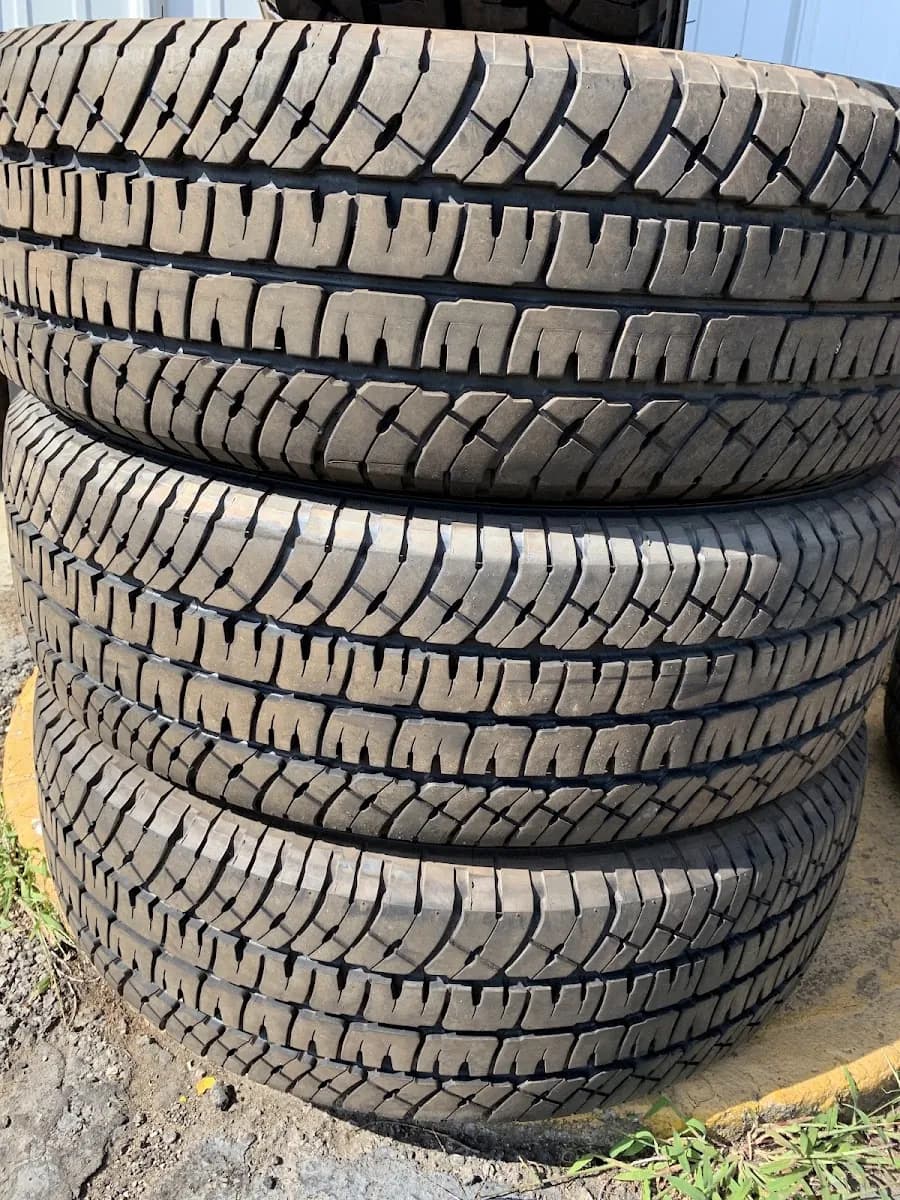
1. Tread depth
NHTSA says a tire should be replaced when the tread is down to 2/32 of an inch, so a used tire should have plenty more than that. Quick check: put a penny upside down in the groove. If you can see all of Lincoln's head, the tread is too low.
2. The date code
On the sidewall, after the letters DOT, the last four numbers are the week and year the tire was made. "2321" means the 23rd week of 2021. Rubber dries out with age, so a very old tire can crack even with deep tread.
3. Old repairs
A repair in the middle of the tread, patched from the inside, is fine. A plug near the edge of the tread or in the sidewall is not. Those spots can't be safely repaired.
4. Damage
Pass on any tire with:
- A bulge or bubble in the sidewall
- Cuts or deep cracks
- Cords or wire showing
- Uneven wear, bald on one edge
5. Size and matching
Buy the size on your door jamb sticker. Tires on the same axle should be the same size and close in tread, ideally the same model, so the car pulls straight and brakes evenly.
Buying used at our shop
Used tires are sold as is, so look them over with us before they go on. Ask to see the tread and the date code. If a tire isn't right for your car, we'll tell you straight.
Tread guidance from NHTSA.